How a Valve update crashed the Counter-Strike skin market and what it has to do with crypto
Date: 2025-10-28 Author: Henry Casey Categories: CRYPTO PAYMENTS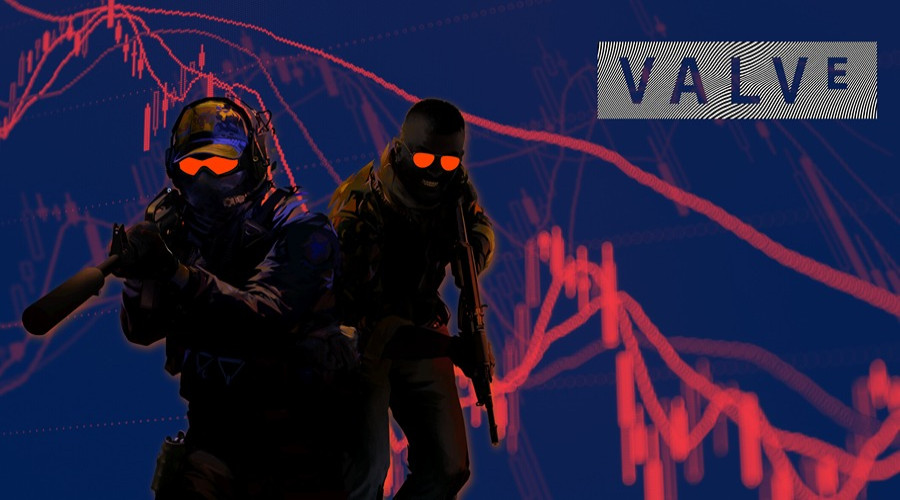
The market for digital skins from Counter-Strike 2 was considered one of the most profitable niches throughout 2025, even outperforming stocks, gold, and cryptocurrency. However, an update released by Valve on October 22 triggered a collapse: the value of in-game items fell by approximately 25% overnight, equivalent to a loss of approximately $2 billion.
The main reason for the collapse was a change to the item drop and exchange mechanics. Valve allowed players to craft rare knives and gloves using less-rarity skins. This instantly increased the supply of previously exclusive items and led to their devaluation. Those who viewed skins as an investment suffered significant losses. Before the update, the rarest items could only be obtained randomly by opening loot boxes, limiting supply and maintaining high prices. Now, the ability to trade has made the market much less predictable and disrupted the old value system.
Interestingly, the skins market was already at record levels in the spring. A study by the Higher School of Economics and the New Economic School found that the Sharpe ratio for CS2 was 0.34—higher than that of Bitcoin, gold, or US stocks. The average annual return reached 41%, fueling the interest of investors and traders who perceived digital items as a new type of "trusted" asset.
However, as crypto analyst Taisiya Romanova notes, the skins market shares the same weaknesses as cryptocurrencies. "Valve effectively increased the issuance of rare assets, as if the project had suddenly issued additional tokens," she explains. In her opinion, the company's decision can be interpreted as an attempt to level the playing field, but the result was the destruction of the fragile balance and a drop in prices.
Comparisons with the crypto market weren't limited to expert assessments. After the crash, the well-known blogger Threadguy on X (formerly Twitter) asked, "Can someone explain what happened to Counter-Strike in crypto terms?" The post sparked a furious reaction, garnering hundreds of thousands of views. Users compared the update to a hard fork without community consent—some remained on the older version of CS:GO, while others migrated to CS2, where the previous assets lost value.
Many commentators drew analogies with NFTs. One compared the situation to the owners of several Meebits being able to "create" a single CryptoPunk, which would devalue the original collection. Others noted the similarities with Axie Infinity, a project whose economy collapsed after a period of rapid growth.
Thus, the CS2 story reminded the crypto community that even digital assets, be they NFTs or in-game items, are subject to the risks of centralization. A single rule change by a developer can wipe out billions in a matter of hours and transform a market that was euphoric just yesterday.